What Shoes to Wear to a Black Tie Wedding (Men & Women)
Black tie means formal shoes — but you have more options than you think. The rules for men, women, and what to wear if you hate heels.
The Short Answer
Black tie is the second-highest dress code. Your shoes need to match that formality.
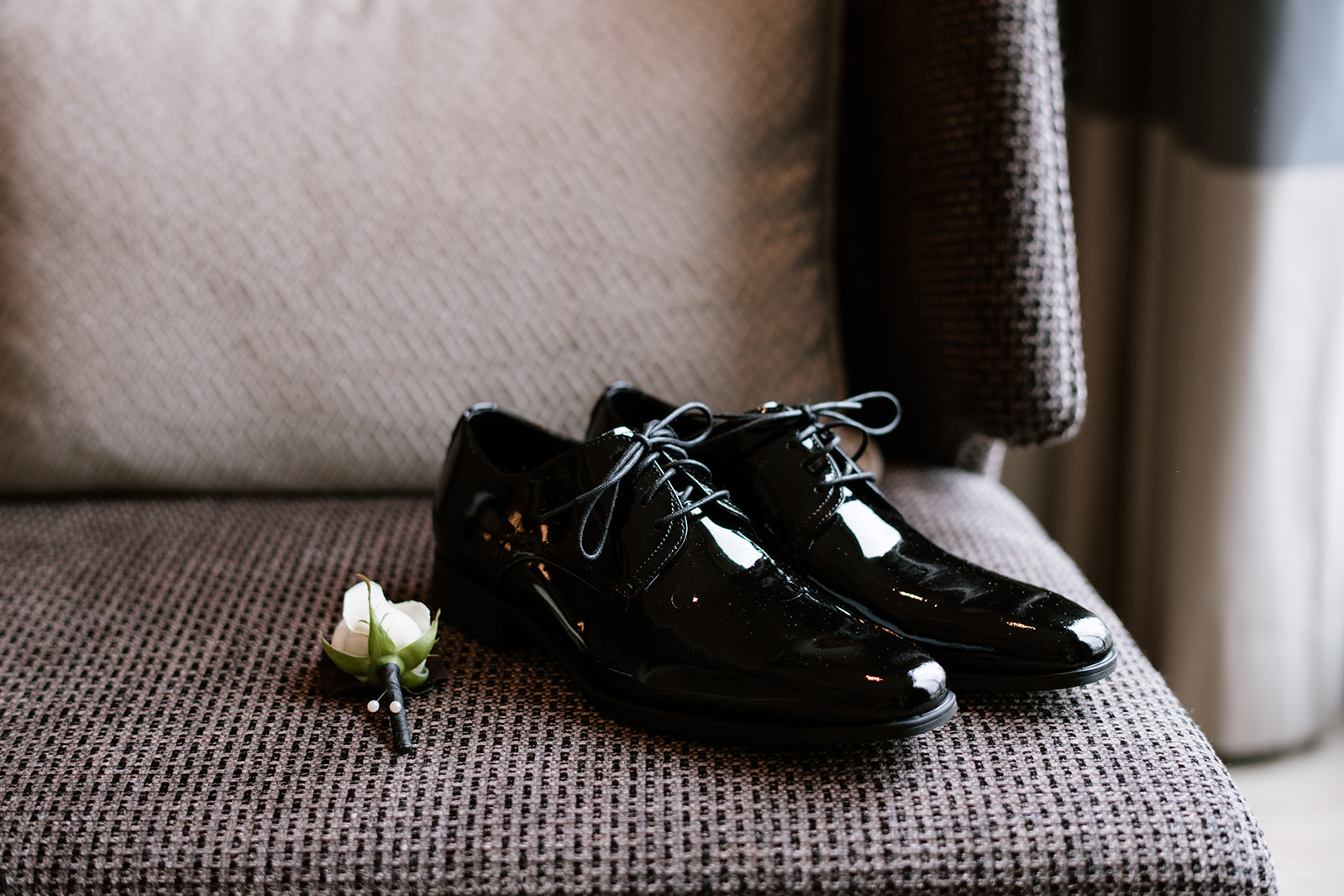
Men: Patent leather oxfords are the standard. Velvet slippers or polished loafers work if the rest of your look is traditional.
Women: Heels are traditional but not mandatory. Embellished flats, block heels, and dressy sandals all work — as long as the material reads "formal."
The key word is polished. No scuffs, no casual materials, no chunky soles.
Men's Black Tie Shoes
Color Guidance
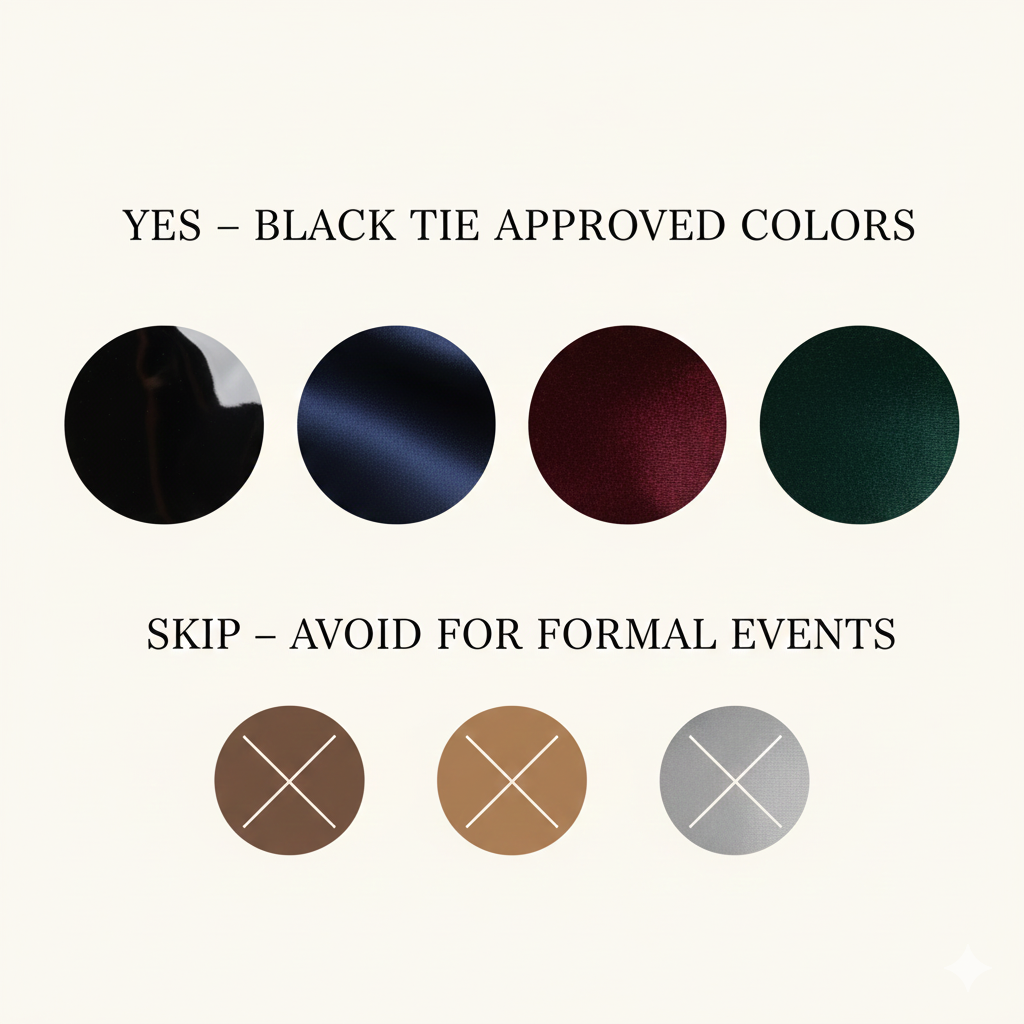
The safe answer: Black. Patent leather or polished calfskin in black is always correct for black tie.
What about midnight blue/navy? Yes — but only if you're wearing a midnight blue tuxedo. Match the shoe to the suit. A black shoe with a midnight suit also works.
What about burgundy or green? Velvet slippers only. A burgundy or deep forest green velvet slipper with a classic black tuxedo is a legitimate style move — just keep the rest of your look traditional to balance it.
What about brown? No. Never at black tie. Doesn't matter how dark or polished. Brown reads daytime, casual, country. Save it for the office or a daytime wedding.
The simple rule: Oxfords and formal loafers = black only. Velvet slippers = black, burgundy, or deep green if you want a subtle statement.
Patent Leather Oxfords
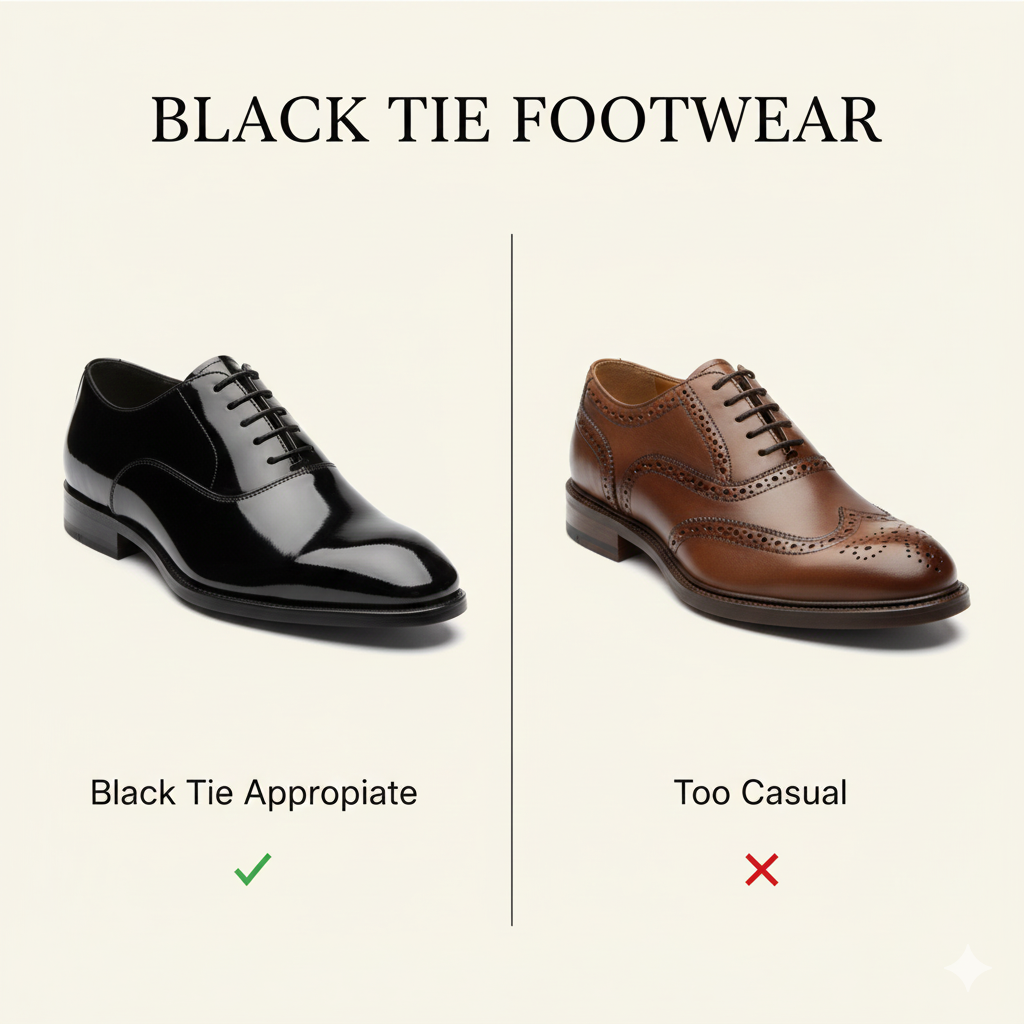
The default choice for black tie. That glossy, mirror-like finish is designed to match the satin lapels on a tuxedo — they're meant to go together.
The simple test: Are they black? Are they shiny? Are they sleek with minimal detailing? You're fine.
Avoid decorative perforations (called broguing) and anything matte or brown. Beyond that, don't overthink it. Nobody at the wedding is checking whether your lacing is "closed" or "open." They're checking whether your shoes look polished and intentional.
Not sure if your black shoes are oxfords? See the visual guide below.
.avif)
Velvet Slippers
Yes, slippers. Before you picture Hugh Hefner — these are structured velvet shoes with a leather sole, often called "Albert slippers" after Prince Albert. Victorian aristocrats wore them to formal events. They're actually more traditional than modern patent oxfords.
Today, they're a stylish alternative at black tie events. Keep them simple — black or deep burgundy, minimal embroidery. The rest of your outfit should stay classic to balance the statement.
.avif)
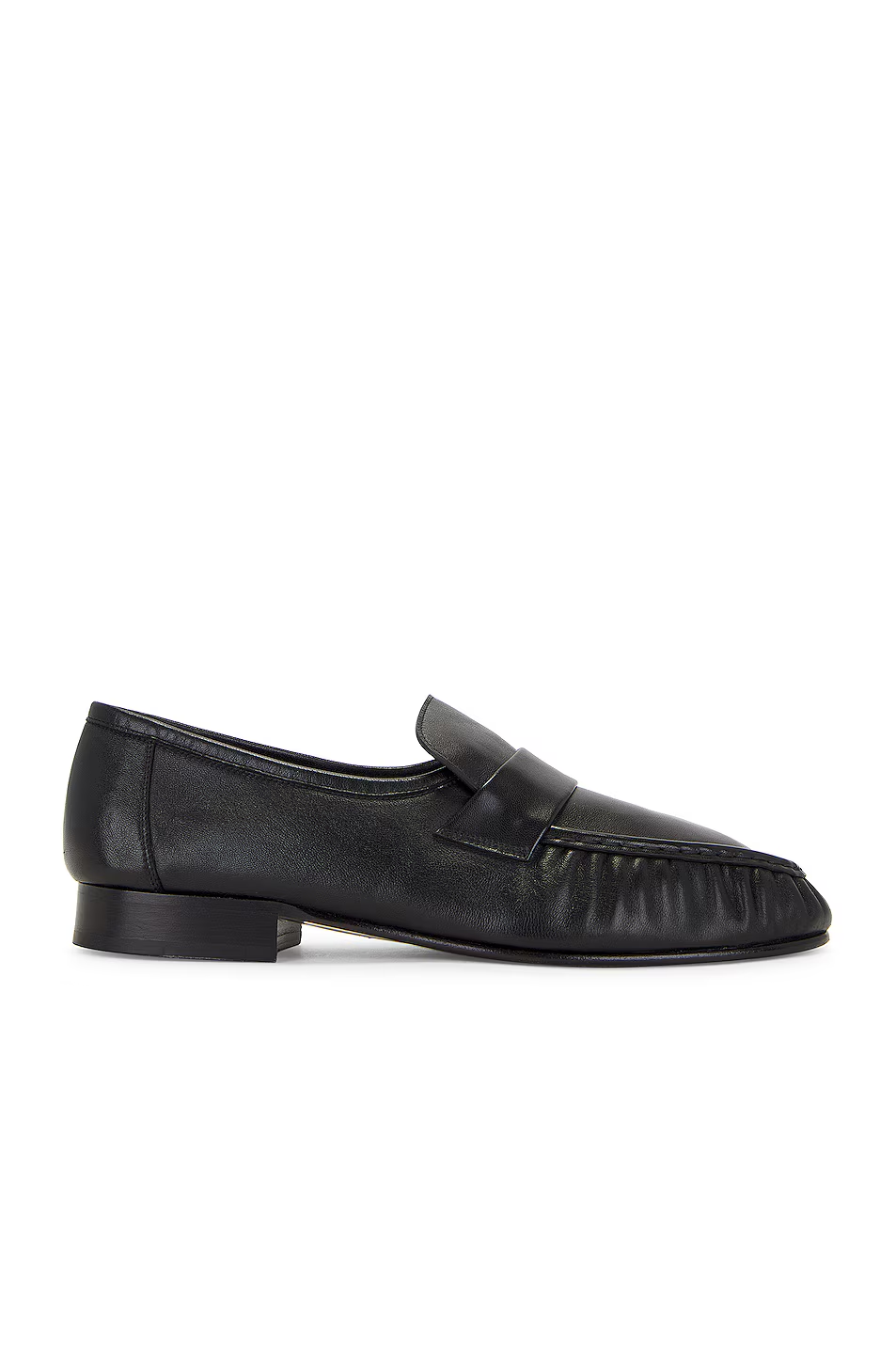
Formal Loafers:
Polished black leather, minimal detailing, slim sole. Not chunky. Not casual. The line between "formal loafer" and "business casual shoe" is thin — err toward sleek.
The rule: If it could work with jeans, it's not formal enough.
.avif)
Women's Black Tie Shoes
More flexibility here, but "formal" is still the filter.
Color Guidance
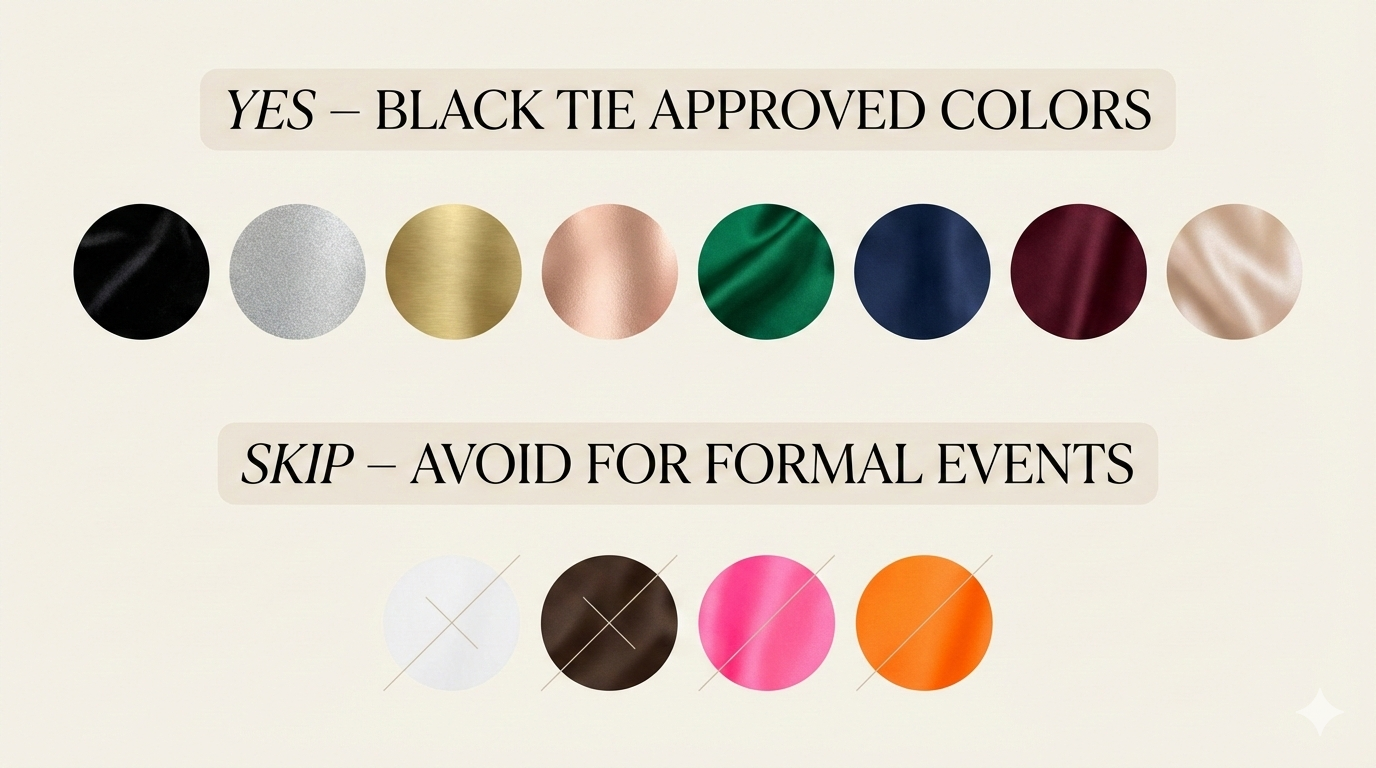
The safe zone: Black, metallics (silver, gold, rose gold), and jewel tones (emerald, navy, burgundy). These all read "formal" and complement most gowns.
What about nude? Yes — nude heels work beautifully and elongate the leg. Match to your skin tone, not your dress.
What about brown? Generally no. Brown reads daytime, casual, or business. Even a dark chocolate heel feels out of place at black tie. Save them for other events.
What about matching your dress exactly? You can, but you don't have to. Matching metals (silver dress, silver shoe) creates a sleek look. Complementary colors (navy dress, gold shoe) add interest. Both work.
What to avoid: White reads bridal — unless you're the bride, skip it. Neon or overly bright colours feel costume-y. And anything scuffed or worn undermines the whole look.
Stilettos
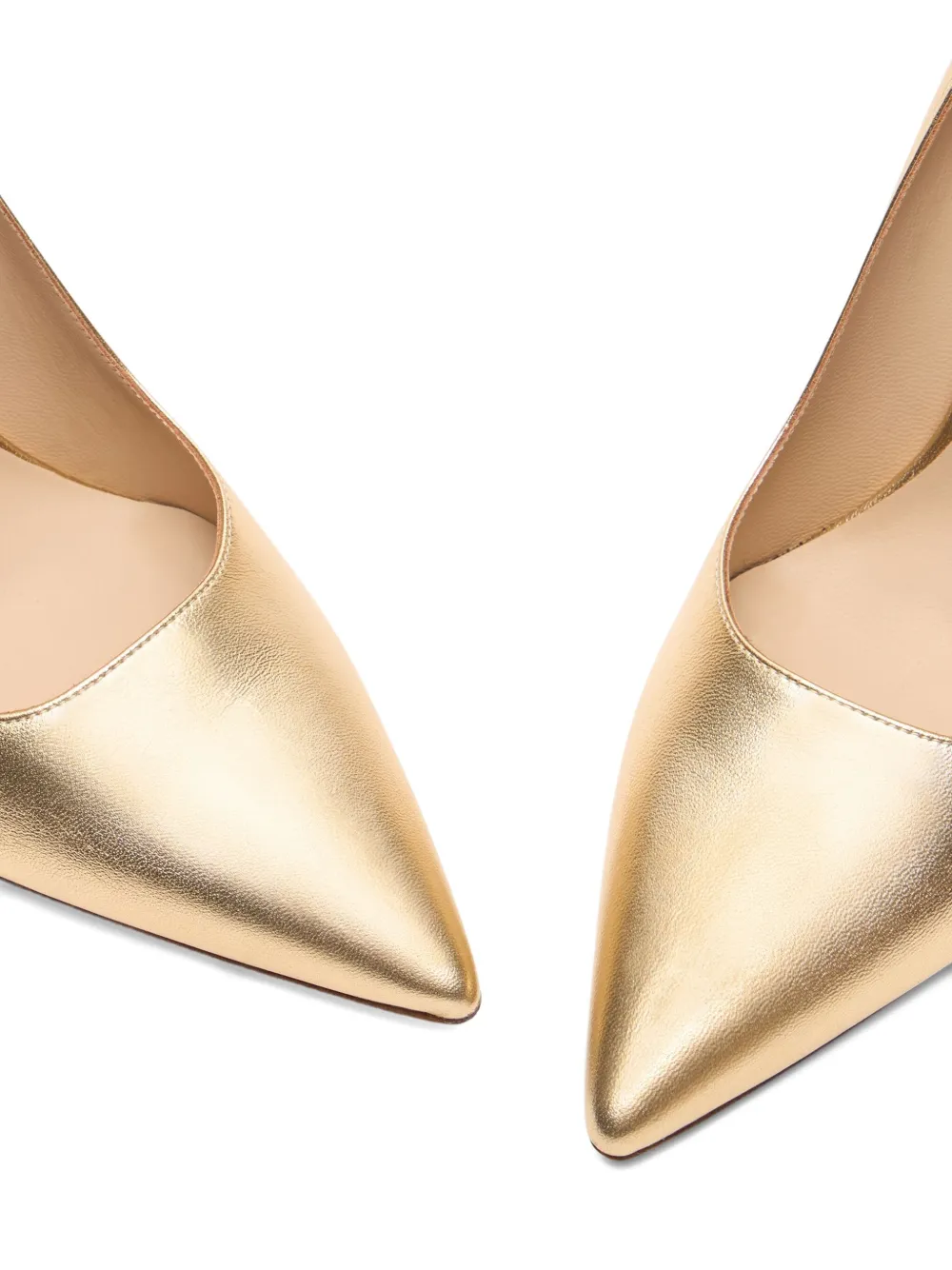
The classic choice — and still the most popular for black tie. A slim heel, 3-5 inches, elongates the leg and matches the formality of a floor-length gown.
Satin, silk, or metallic finishes read most formal. Patent leather works too. Matte leather or suede can feel slightly underdressed unless the shoe has other formal details (crystal buckle, elegant ankle strap).

The honest trade-off: Stilettos look stunning but hurt after 2-3 hours. If you're the type who kicks off your shoes the moment dancing starts, consider whether you'd rather start in block heels and stay comfortable all night. No one's judging comfort — they're judging scuffed shoes and limping.

Block Heels:
Just as elegant as stilettos, far more stable. A 2-4 inch block heel gives you height and posture without the wobble — and you'll actually make it to the last dance.
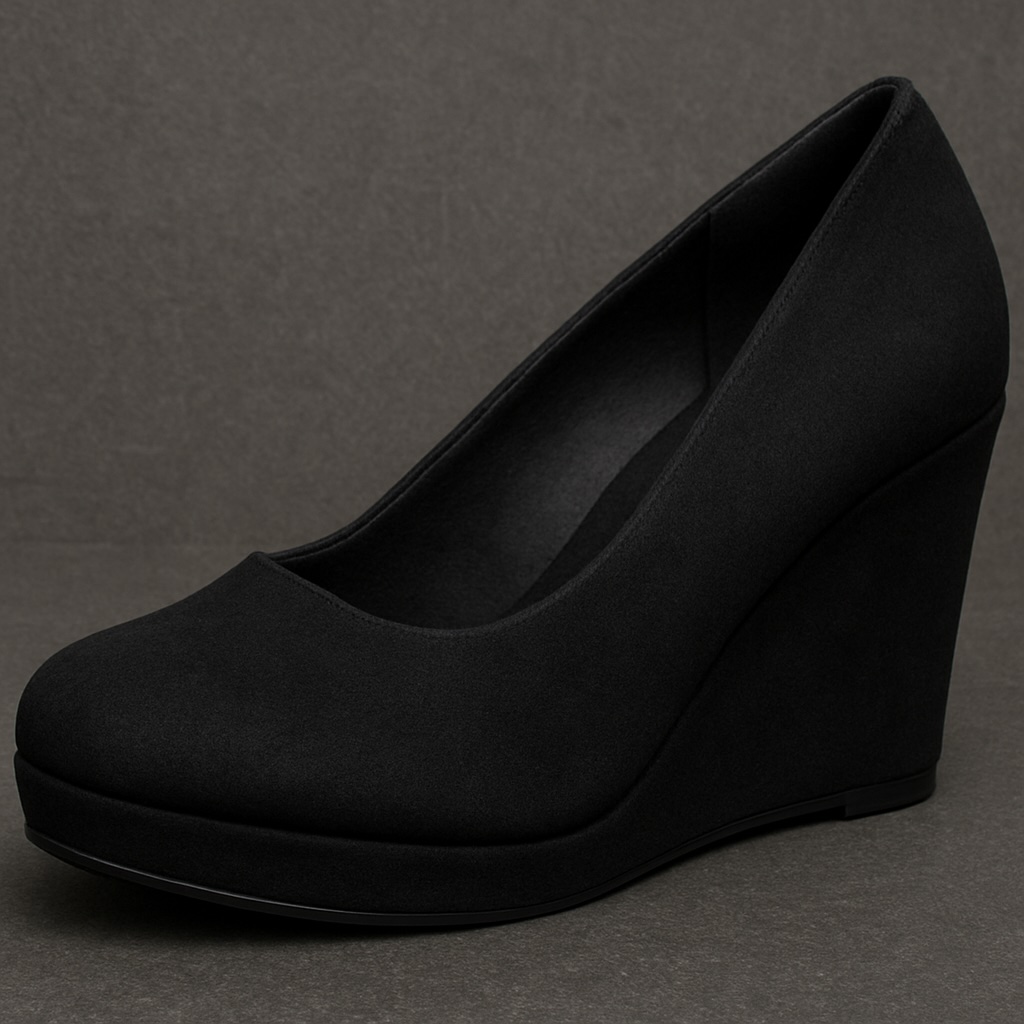
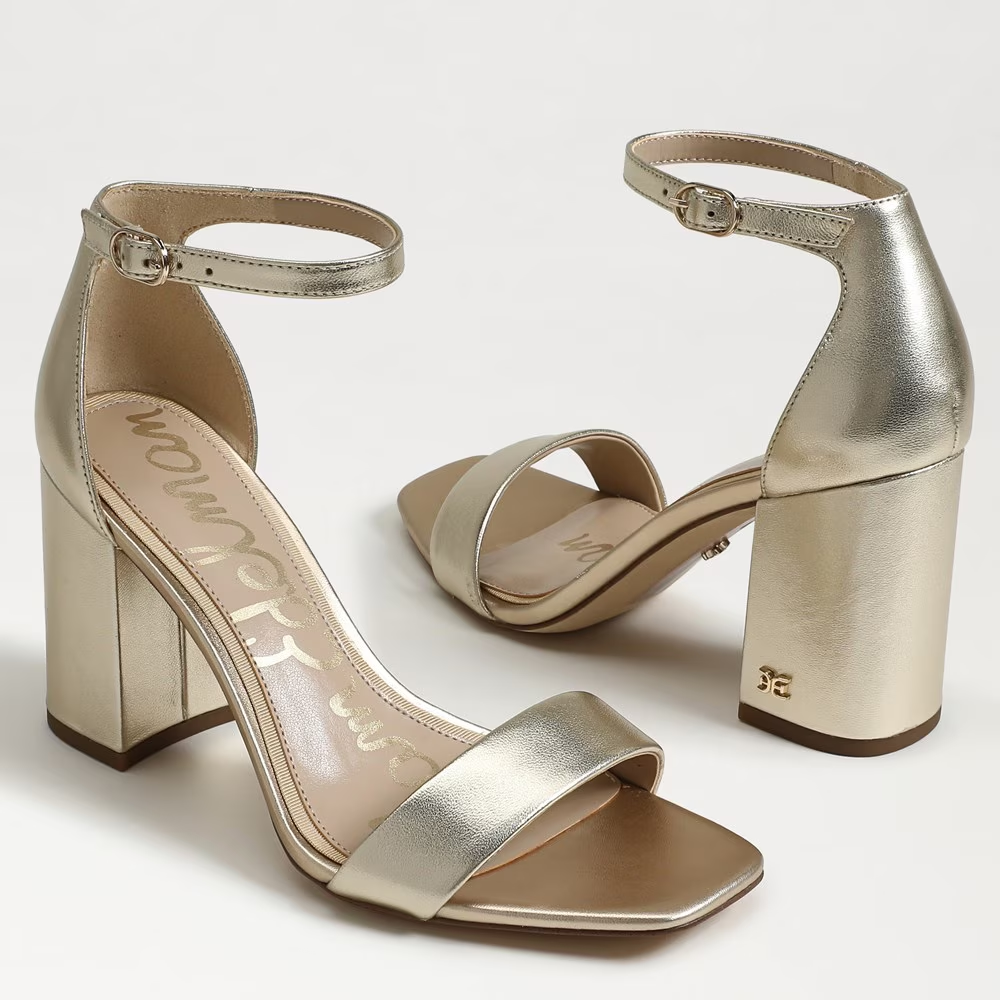
Block heels have fully shed their "less formal" reputation. In satin, velvet, or metallic leather, they're completely appropriate for black tie. The key is a refined silhouette — a sleek, tapered block, not a chunky platform.
Best for: Outdoor ceremonies, venues with cobblestones or uneven floors, long events, anyone who values being able to walk. Also a smart choice if you're tall and don't want to tower over your date in 4-inch stilettos.
The secret: From across the room, no one can tell if you're in stilettos or block heels. They just see a woman who looks comfortable and confident. That reads better than a woman wincing with every step.
.avif)
Strappy Heeled Sandals
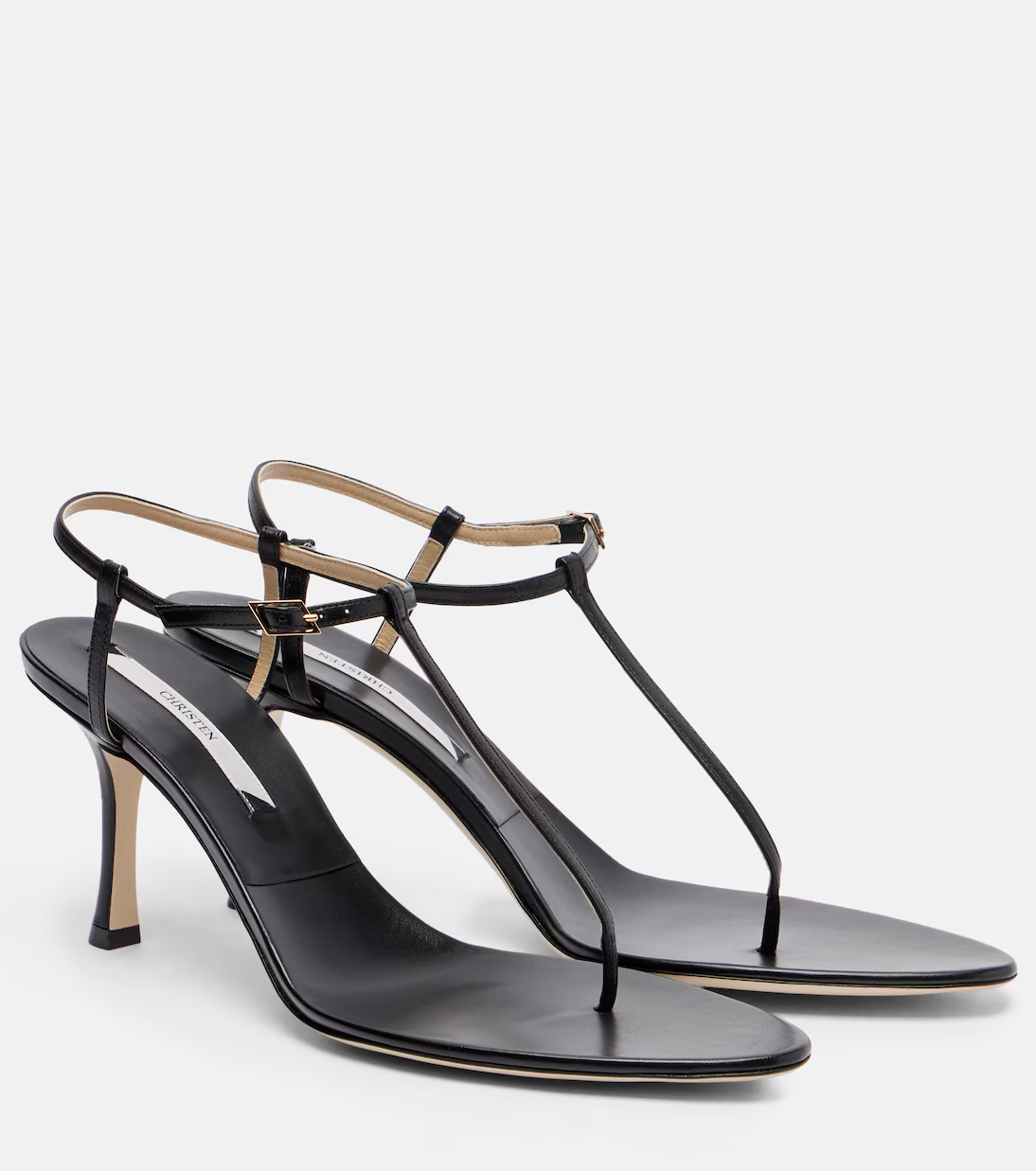
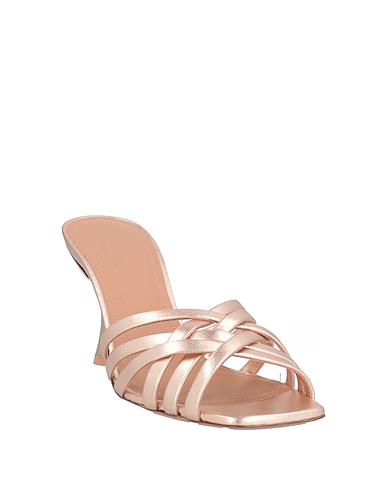
A heeled sandal with delicate straps is perfectly black tie appropriate — think minimal straps, satin or metallic finish, 3-4 inch heel. This is one of the most popular choices for formal events, especially in warmer months.
The key is refined. Thin straps, elegant materials, nothing chunky or casual. If it looks like it belongs at a music festival, it doesn't belong at black tie.
Embellished Flats
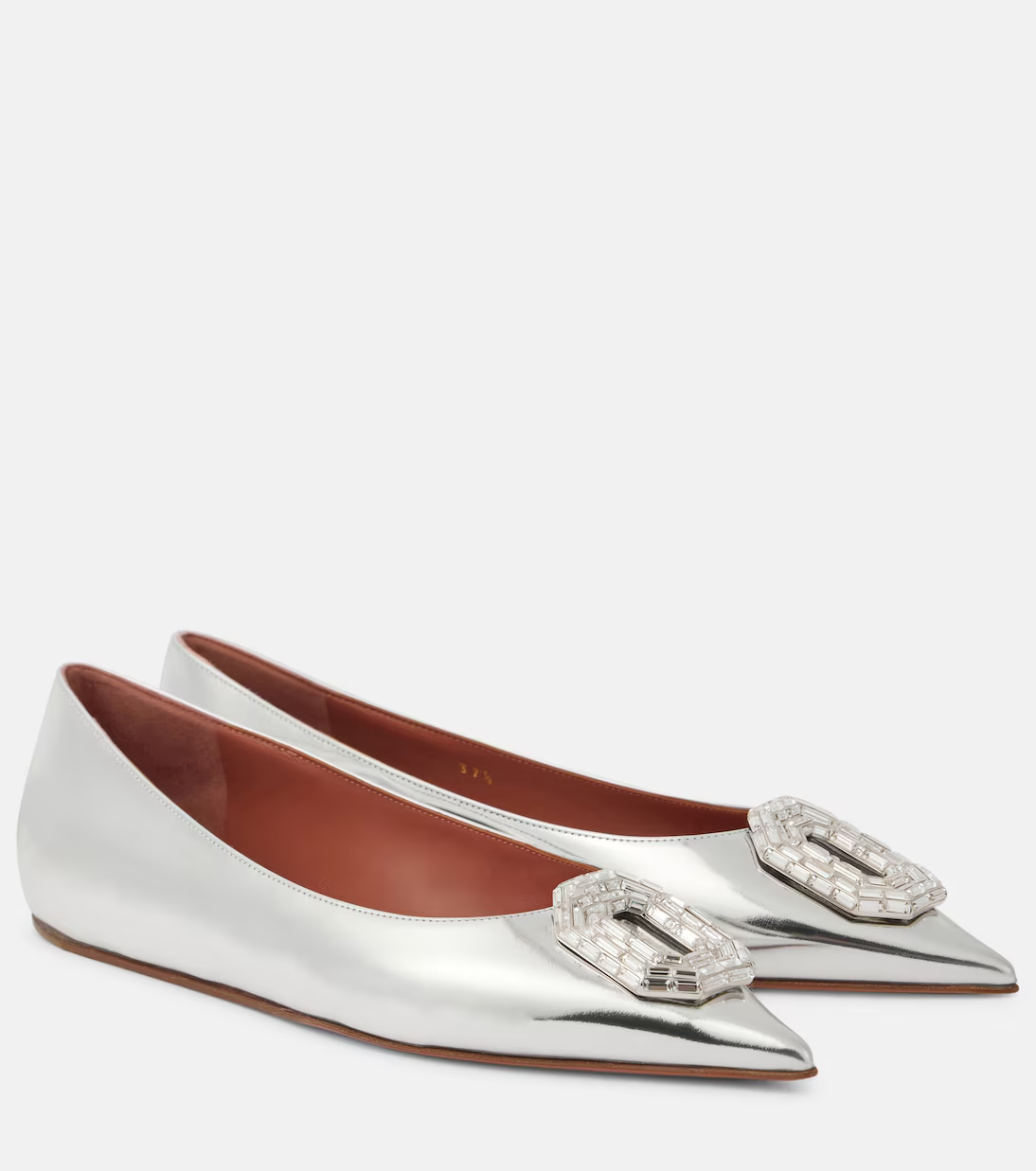
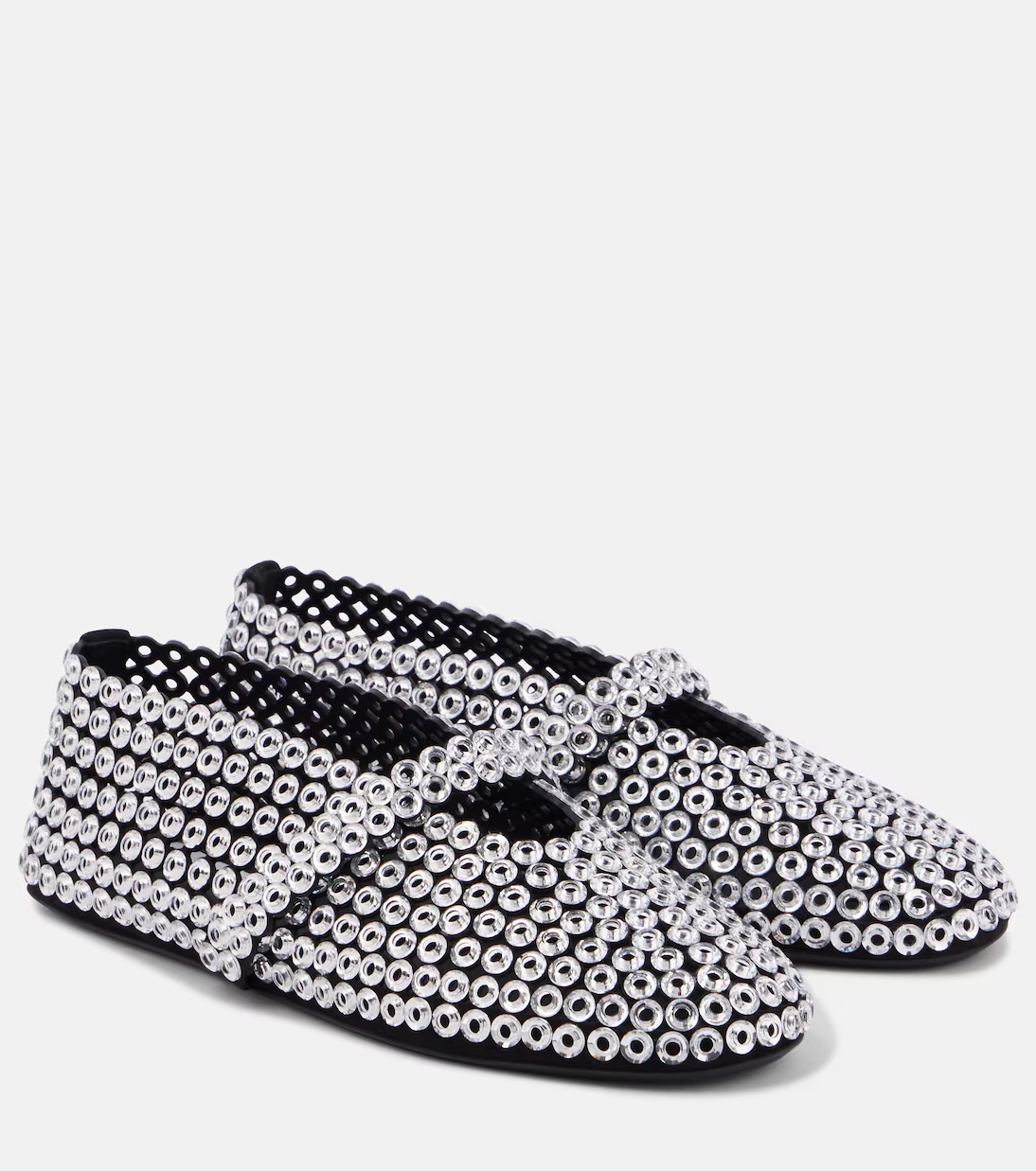
An embellished flat is simply a flat shoe with added detailing — crystals, beading, bows, jeweled buckles, or metallic finishes. The "embellishment" is what elevates it from a basic ballet flat to something formal enough for black tie.
Think of it this way: a plain black leather flat reads "office." A black satin flat with crystal detailing across the toe reads "I chose this for the occasion."
Yes, flats work at black tie events (more on this below). The key is elevation through material and detailing. Satin, velvet, or metallic leather. Something that catches the light. If it looks too practical or everyday, it's not doing enough work.
Yes, Flats Are Fine
Let's address this directly: you can wear flats to a black tie event.
The catch is they need to look intentional, not like you gave up on heels.
What makes a flat "black tie appropriate"?
Best flat styles for black tie:
- Embellished ballet flats
- Velvet smoking slippers
- Pointed-toe satin flats
- Crystal-adorned mules
Venue Quick Guide
Pro tip: If the ceremony is outdoors and reception is indoors, bring two pairs. Block heels for the lawn, stilettos for the dance floor.
What to Avoid
- Casual materials: Canvas, rubber soles, unpolished leather
- White shoes: Reads bridal, not guest
- Overly trendy: Platform sneakers, chunky dad sandals — save them for other events
- Scuffed or worn shoes: Black tie demands polished. Literally.
- Open-toe for men: Never

FAQs
Can men wear loafers to a black tie wedding?
Yes — if they're formal loafers. That means polished leather, slim silhouette, minimal hardware. Not the loafers you wear to the office.
Are sandals appropriate for black tie?
For women, yes. Strappy heeled sandals or embellished flat sandals can work beautifully with a formal gown. For men, no.
What color shoes for black tie?
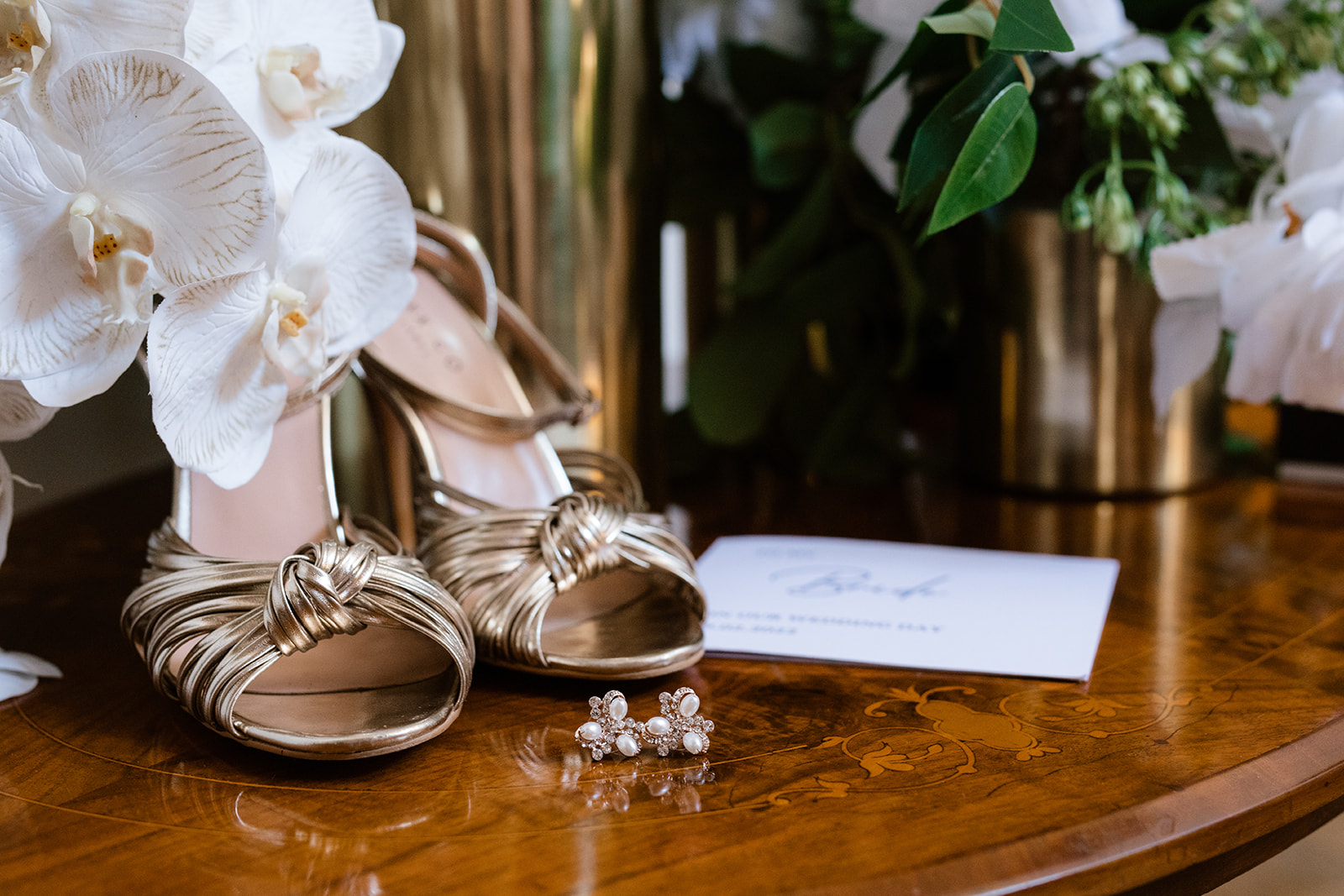
Men: Black (or match a midnight blue tux with midnight shoes).Women: Black, metallics, or colors that complement your dress. Avoid white.
Can I wear block heels to a black tie wedding?
Absolutely. Block heels are fully appropriate and often more practical. Choose a refined style in a formal material.
Do I need to match my shoes to my bag?
Not exactly, but they should coordinate. Matching metals (silver shoes, silver clutch) creates a cohesive look without being too "matchy."
.JPEG)
Brendan Creaser
Wedding Photographer from the Mornington Peninsula in Australia, Brendan has been photographing the latest styles in wedding shoes and beyond for the past 6+ years.


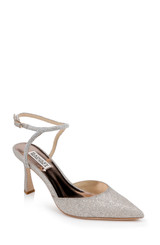
Shop the products mentioned in this article

.avif)
.avif)

Don’t miss any article from Affiliate
Lorem ipsum dolor sit amet consectetur adipiscing elit ut aliquam, purus sit amet luctus venenatis lectus magna fringilla urna.